CHILDREN OF KATWE

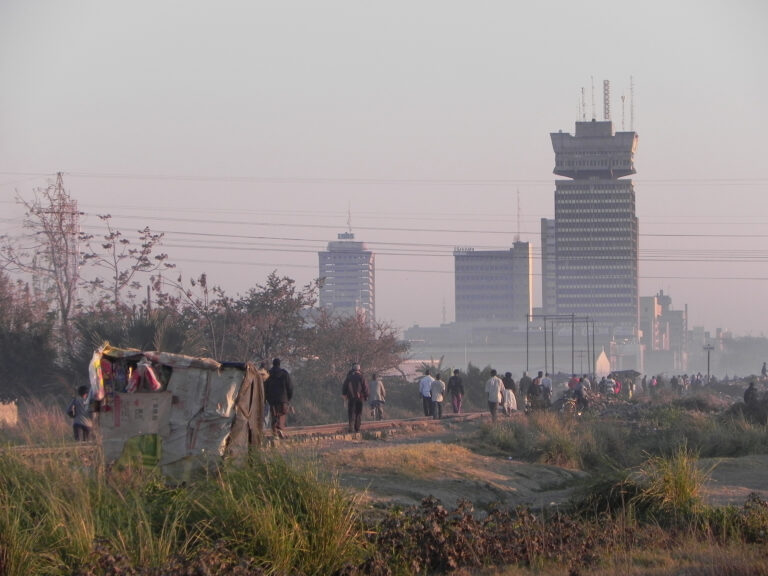
Just a few hundred meters from the business center of Uganda’s capital lies one of Kampala ’s poorest districts. These are the slums of Katwe, where life is a daily struggle for survival.
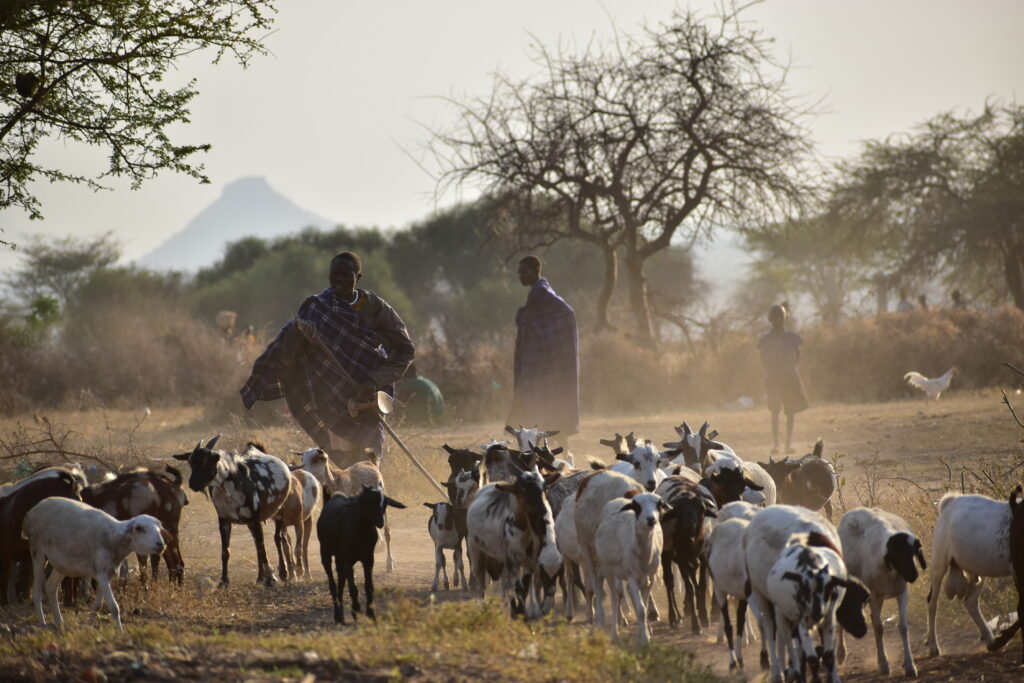
I go to Katwe with my friend, Fr. Josaphat Diyuo of the Missionaries of Africa (White Fathers), who ministers there to a community of more than two thousand Karimojong people. They are one of Uganda’s fifty ethnic groups, with a population estimated at around half a million. They are proud pastoralist warriors inhabiting the harsh lands of Karamoja in the country’s northeast. This semi-arid region near the Kenyan border is among the most marginalized by the government in Kampala, and the bloody cattle raids that have plagued the area for years have given both the region and its people a notorious reputation. Even those who leave their homeland hoping for a better life in the capital still face stereotypes.


“They came to Kampala looking for work and safety. But people here often treat them with prejudice and fear,” Josaphat admits.
The ancestors of the Karimojong arrived in what is now Uganda in the 16th century from the region of Abyssinia (Ethiopia), fleeing the expansion of Islam. For centuries, their lives have revolved around cattle and goat herding. Regional instability, frequent droughts, and lack of prospects force many, especially the young, to leave their homeland. Those who migrate to the capital with hope end up in Katwe, where they collide with the brutal reality of street life.
A Story of Hope
Located opposite the modern Arena Mall, Katwe began to develop in the 1960s along a colonial-era railway line linking Kampala with Kasese in western Uganda. The line has been inactive since the 1990s. For decades the district has attracted people from rural areas searching for opportunity.
More than half of Katwe’s approximately 40,000 residents are children. Uganda is one of Africa’s youngest societies, with an average age of 21 and more than 45 percent of the population under 14 years old.
When I visit Katwe, Fr. Josaphat’s parishioners invite us into their cramped makeshift homes built from mud or patched together with sheets of metal. There are no sanitary facilities or running water, and scraps of cloth serve as interior walls. As many as ten people live in a single room, sleeping on the ground.
“And how much do you pay for this?” I ask.
“60K a month,” they answer, 60,000 Ugandan shillings, about 15 USD.
The children do not attend school because it is too expensive.
“The children simply live in this slum. I would like to create a place for them here, a school center or vocational center where they could learn sewing or carpentry. To give them opportunities…” says the missionary.
For many children, the street is their workplace. They are exposed to begging and constant danger. Unemployment, drugs, violence, prostitution, HIV, and gangs are the dark face of Katwe.
But the slum has also become a story of hope.It is the story of Phiona Mutesi, a girl who, thanks to the Sports Outreach Institute and coach Robert Katende, became a chess star competing in international tournaments. Katende transformed the lives of hundreds of children, and Phiona’s story was adapted into the Disney film Queen of Katwe.


Josaphat is also trying to transform the lives of the Karimojong in Katwe. Although he himself comes from Ghana, he says simply: “I am Karimojong.”
“Many believe they will find opportunities in Kampala. But they lack the education needed for normal work in the city. So many end up begging in the streets, like these children…” he says.
“That’s why I tell them during sermons: ‘Be active. You cannot spend your life begging.’ Because I see they have talents, they simply lack capital.”
So he tries to support their initiatives. Even buying rolls of wire can become the start of work.
They use them to make cages for chickens and turkeys. Women create beads and bracelets and sell them among themselves.
“Even a small income can save a family. Someone earns 20,000 shillings (about 5 USD) and sends it home. For us it is little, but there it is enormous help,” the missionary emphasizes.
Katwe is famous for its creativity. Since Uganda gained independence in 1962, the district has been known as a center of local entrepreneurship. Its streets are filled with self-taught craftsmen, from car mechanics to appliance repairers and makers of flip-flops from used tires. These practical inventions even earned the name Magezi ga Baganda, “the wisdom of the Baganda.”
Cattle Raids
The missions among the Karimojong are still young. Many continue to practice traditional beliefs. They call God Akujù. They believe he gave them all the cattle in the world, which is why they feel entitled to take cattle from others. They also believe in lesser deities, both good ones like Nibara and evil ones like Nipian.
“Among my parishioners I see deep faith. Baptism is important to them. And they love the Church. Though most churchgoers are women. Here they find a sense of dignity,” the missionary says.
The first Catholic missionaries among the Karimojong were Italian Comboni missionaries. They arrived in 1933 from the Acholi lands, but during World War II they were arrested by the British administration. The mission resumed in the 1950s. Later came the White Fathers.
In 2010 they established a mission in the Tapac Valley in the Diocese of Moroto, where I first met Josaphat ten years ago. Among the Karimojong they launched the “Happy Cow” program, now continued by the local Caritas. It was intended to prevent bloody cattle raids.
Raiding neighboring communities has for decades been an integral part of Karimojong life. Although considered a crime under Ugandan law, just like forced marriages of young girls, as I hear repeatedly, “The Karimojong have their own laws,” and aberu, girls, have virtually no rights.
“Traditionally, marriage is not a matter of choice. It is a transaction. Girls are around twelve years old when they are married off. The government reacts, but too slowly,” Josaphat admits.
Armed cattle theft is almost ritualistic among the Karimojong. It is a source of identity and a way to gain respect, and for men, a way to obtain a wife.
“A wife may require as many as two hundred cows. And since they are polygamists, you can imagine… Dying during a raid is considered an honor for a warrior,” Josaphat adds.


Violence in Karamoja intensified after the fall of Idi Amin’s regime in 1979, when weapons depots in Kotido and Moroto were looted. Thousands of Kalashnikov rifles fell into the hands of warriors, transforming traditional raids with bows and spears into brutal armed conflicts.
Over the following decades, Karamoja became one of Uganda’s most dangerous regions. Even the Lord’s Resistance Army, which terrorized northern Uganda, avoided the area.
In 2006 the Ugandan government launched a campaign to voluntarily disarm the Karimojong, offering amnesty to those who surrendered weapons.
“The problem was that no alternative was created for them. They received no support and no tools to change their way of life. So within a short time, raids once again became their source of livelihood. We were there then,” the missionary recalls.
In 2023 did the government again offer amnesty to those willing to disarm.
And yet, “last week another eight people were killed. The Karimojong came to us,” said a parish priest I met in neighboring Acholi lands.
“There are still attacks,” soldiers told me as we spoke on the summit of Mount Oret, where they patrol the borderlands with Karamoja.
“Those who are in Kampala want peace, even though life here is not easy,” Josaphat stresses.
“I have met many wonderful people”.

Building a Community
We visit the slums several times. May is the rainy season, so the makeshift houses are often flooded. In a muddy clearing amid piles of rotting waste, some women wash clothes while others cook soup. Floating in the pots are red combs, rooster heads, and all kinds of innards—the cheapest ingredients available.
Nearby, children play with an upside-down bicycle wheel.
We stop in the middle of the slum for a gathering with the community. They are warm and excited about our visit, which they had been awaiting. Dressed in traditional clothing, they wrap me as well in a traditional shuka, a checkered blanket, and place a hat with ostrich feathers on my head. Then they hand me a wooden stool and a stick, inseparable symbols of the Karimojong.
“Now they want to give you a name,” says Josaphat.
I repeat it several times: Lopeyo Lokiru “the guest who comes with the rain.”
They laugh and begin to talk about life in Katwe, their worries, dreams, and needs, the most basic needs. A bond begins to form.
My friend priest does not hide the limitations of his mission.
“I care for their spiritual needs. They love community and feel good together. But they always ask: ‘Father, do you have something for us to eat?’ And I answer: ‘How can I feed all of you?”


Faith in Katwe is alive, but the reality of slum life remains harsh.
“They trust in God and seek protection from evil. But there is also alcohol and gambling. I tell them: ‘Save your money, don’t drink it away. Alcohol steals both time and money.’”
They call Josaphat whenever they need help. He accompanies them in life and in death. He gathers people for prayer and helps buy coffins when someone dies.
“At least here there is a public cemetery. In Karamoja they carry the bodies out into the bush. Later there is nothing left to bury. The bodies decompose or are torn apart by leopards and hyenas…”


Josaphat has served in Katwe since 2021.
“I came here from the mission in Tapac. Before me there was a Comboni missionary, Fr. John Bosko. He organized the first prayers for them. Now I continue the work.”
Every year the number of Karimojong in Katwe grows.
“They say life is better here, but the standard of living is still extremely low. There are many challenges, a great need for education, and too many children begging in the streets. I would like to help them, to create opportunities for them…”
Support with us Fr. Josaphat’s mission in Katwe.
Fundacja W STRONE AFRYKI
(Towards Africa Foundation)
PL 57 1020 2313 0000 3502 1159 1478
Titel: Mission Katwe
(Bank Identifier Code/Swift): BPKOPLPW